
New AI Tool for Eye Disease Detection Articles Feature Comp Med, CGSI Authors
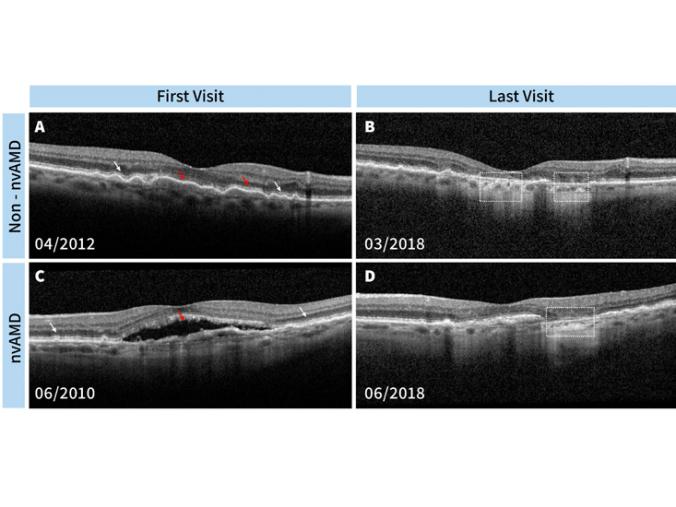
Fig. 1 From: A deep learning model for automated identification of age-related macular degeneration atrophy
May 22, 2026
A recently published paper, "A deep learning model for automated identification of age-related macular degeneration atrophy," showcases the incredible advancements that happen when great minds work together.
The paper is written by a large collaborative team, including many authors from the UCLA Computational Medicine Department. The project was supported by stimulating discussions with participants of the Computational Genomics Summer Institute (CGSI).
Every summer, CGSI brings together mathematical and computational scientists focused on areas like genomics, electronic health records, and medical imaging. By gathering researchers across all career stages for programs and workshops, CGSI fosters an intensely collaborative environment. The summer institute acts as an incubator for scientific innovation, proving that when diverse scientists are brought together to share ideas, it can lead to tangible, real-world breakthroughs like this new AI-driven medical tool.
The Challenge of Diagnosing Eye Disease
Age-related macular degeneration (AMD) is a leading cause of vision loss and blindness in older adults. As the disease worsens, it causes irreversible damage, or "atrophy," in the retina.
Currently, diagnosing and tracking this damage requires eye specialists to examine highly detailed 3D eye scans manually. Because doctors have to review numerous image slices to spot the damage, the process is:
- Expensive
- Extremely time-consuming
- Prone to human error
An AI-Powered Solution
To solve this problem, the collaborative research team developed a deep learning Artificial Intelligence (AI) model that acts as a smart assistant to automatically detect AMD damage.
The scientists trained their AI tool using a massive dataset of nearly 5,000 3D eye scans from more than 2,500 patients. The resulting AI model achieved highly accurate, state-of-the-art performance. Impressively, it was able to successfully identify eye damage even in highly complex patient cases, and it performed consistently well when tested on scans from entirely different clinics.
By automating the detection of eye damage, this new AI tool has the potential to:
- Dramatically reduce the workload for doctors
- Improve the consistency of diagnoses
- Enhance clinical trials
Ultimately, this innovation stands as a prime example of how the annual cross-disciplinary collaborations formed at CGSI can translate into powerful technologies that advance modern medicine.
Research Papers
- Avram, O., Shwartz, Y., Green, A. et al. A deep learning model for automated identification of age-related macular degeneration atrophy. Graefe's Archive for Clinical and Experimental Ophthalmology (2026). https://doi.org/10.1007/s00417-026-07205-4
- Avram, O., Durmus, B., Rakocz, N. et al. Accurate prediction of disease-risk factors from volumetric medical scans by a deep vision model pre-trained with 2D scans. Nat. Biomed. Eng 9, 507–520 (2025). https://doi.org/10.1038/s41551-024-01257-9
Institutional Links
Tags: